


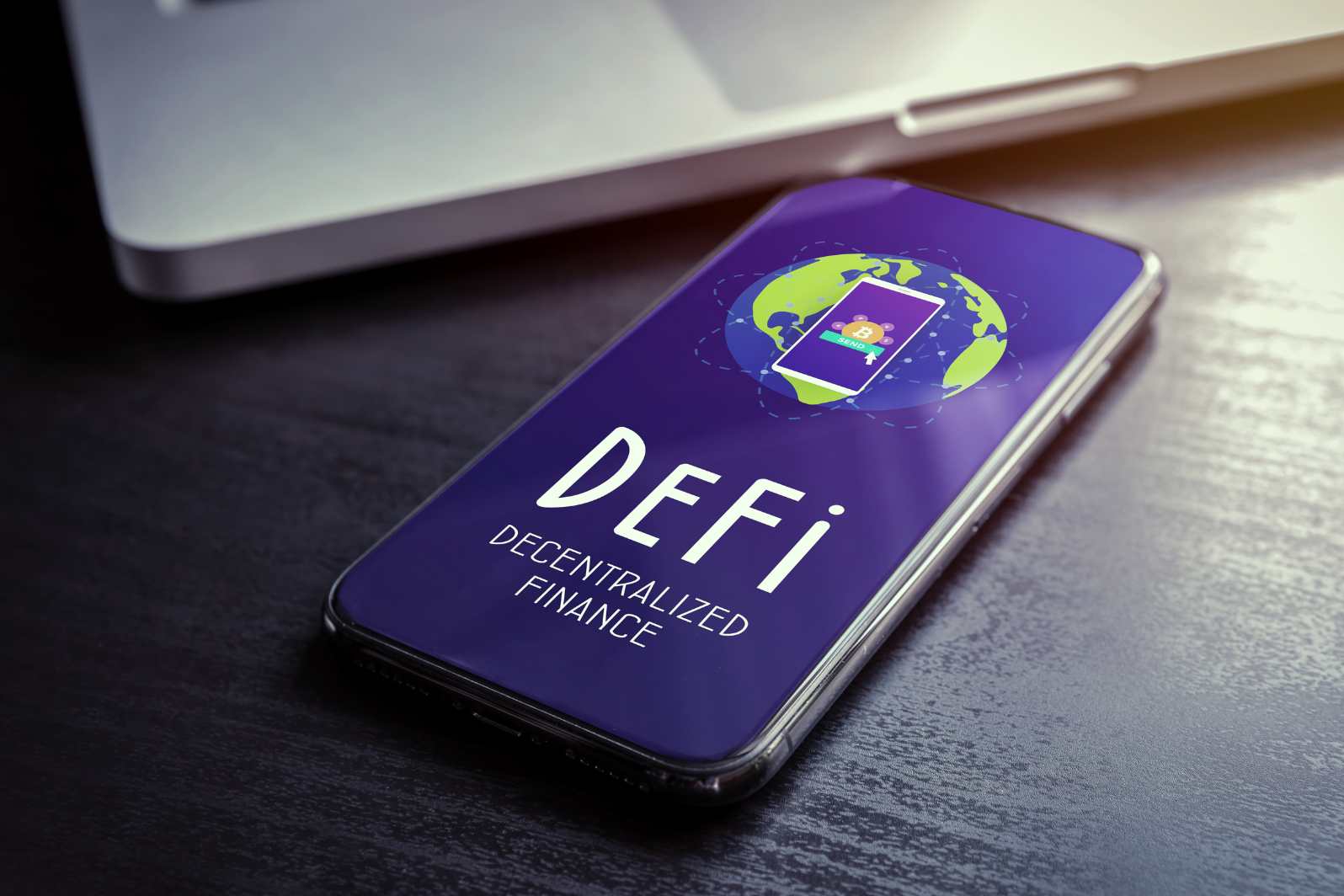
The world of finance is evolving at a rapid rate and one of the most significant innovations helping to redefine this space would be Decentralized Finance, or more simply — DeFi. Five years later, DeFi isn’t a niche idea – it’s remaking how people borrow, lend, trade and make money online without relying on central banks.
If you’ve been wondering what DeFi is, how it works and why it’s growing so fast, this piece explains the basics in clear language.
1. What Is Decentralized Finance (DeFi)?
DeFi is short for Decentralized Finance, a collection of digital services built on top of blockchains, the same technology that underpins the likes of Bitcoin.
Rather than depending on middlemen, DeFi lets people make financial transactions directly through smart contracts – self-executing programs that operate on blockchains such as Ethereum, Solana or Binance Smart Chain.
In a word, DeFi puts you in charge of your money – you can lend, borrow, invest and trade 24/7 without permission from any central authority.
2. How DeFi Works
DeFi utilizes three main technologies:.
a) Blockchain:
It is the digital record (sometimes referred to as a ledger) that reveals an entry, this much money entered the system at that time.
b) Smart Contracts:
These are lines of code that, when certain conditions are fulfilled, will automatically execute agreements — meaning no humans need be involved.
c) Cryptocurrencies and Tokens:
To run their systems, most DeFi applications rely on using crypto assets (such as ETH, SOL or stablecoins like USDT and DAI.).
For instance, if you lend your cryptocurrency on a DeFi platform, a smart contract can automatically monitor and enforce the repayment.
3. Key Features of DeFi
There are five main principles that DeFi is built upon which set it apart from traditional finance:
- Decentralization: The network is not owned by one single entity (no central control point). Everything runs on blockchain.
- Transparency: All transactions are written to a public ledger that anyone can inspect.
- Accessibility: All you need is an internet connection; no bank account required.
- Interoperability: DeFi apps work together to build new financial products.
Ownership: You remain the rightful owner of your assets. There is no bank that can freeze or block your money.
4. Common DeFi Applications
DeFi refers to an array of financial services. Here are a few of the latest:
a) Decentralized Exchanges (DEXs)
Platforms like Uniswap, Haven and PancakeSwap enable users to trade cryptocurrencies directly with each other — rather than through a central exchange.
These DEXs are built on liquidity pools, which allow users to deposit funds for trading and receive a portion of the transaction fees.
b) Lending and Borrowing Platforms
DeFi services like Aave, Compound and MakerDAO allow users to lend their cryptocurrency holdings to others and earn interest. Borrowers give collateral, like ETH, to get a loan in stablecoins.
This protocol operates by the smart contracts, thus, borrowing and lending is faster and easier.
c) Stablecoins
Stablecoins such as USDC, DAI, or Tether (USDT) are cryptocurrencies whose value is linked to a real-world asset like the US dollar.
They help stabilize fluctuations, in a way that makes “DeFi-ing” more predictable and safer.
d) Yield Farming and Staking
Yield farming is when you lend or stake crypto in DeFi applications to earn interest or rewards.
Customers transfer their accounts to platforms that provide the best returns.
Staking, on the contrary, requires you to lock your crypto to support blockchain security and earn rewards in exchange.
e) Decentralized Insurance
DeFi insurance platforms such as Nexus Mutual insure users against risks such as hacks, exchange defaults or bugs in the code.
5. Advantages of DeFi
DeFi has many advantages that are revolutionizing traditional finance:
- No Middlemen You don’t have to rely on banks or brokers. Transactions are peer-to-peer.
- Fast Transactions: Smart contracts realize deals as soon as the conditions are satisfied.
- Open Access: Everyone can join from everywhere, with no credit checks or paperwork.
- Transparency: All transactions are not only visible but also can be inspected by a third party, alleviating the risk of fraud.
- Better Returns: DeFi apps may have better interest rates than traditional banks.
6. Risks and Challenges of DeFi
Sure, DeFi is exciting, but that doesn’t mean it’s risk-free. You need to know the risks before investing:
a) Smart Contract Bugs
If a smart contract has a bug in the code, hackers can take advantage of it and abscond with money.
b) Market Volatility
The value of cryptocurrencies can drop fast, and that impacts your investments or loans.
c) Scams and Fake Projects
Not all DeFi protocols are reliable. Others vanish, “rug pull” scams in which investors’ money disappears.
d) Lack of Regulation
Because DeFi is not regulated by any government, its users have no legal protection in the event that something goes wrong.
e) High Transaction Fees
Blockchain networks such as Ethereum can charge high gas (transaction) fees during peak traffic.
Smart Tip: Always do your own research, invest in audited projects and never put in more money than you can afford to lose.
7. How to Get Started with DeFi
If you’re new to DeFi, here is a simple journey of how to start safely:
Step 1: Set Up Your Crypto Wallet
Develop a non-custodial wallet such as MetaMask or Trust Wallet. That means you have complete control over your funds.
Step 2: Buy Cryptocurrency
Buying mainstream cryptos such as ETH or USDC on a reputable exchange. You will use these to interact with DeFi apps.
Step 3: Choose a DeFi Platform
Begin with reputable, proven platforms such as Aave, Uniswap or Compound.
Step 4: Connect Your Wallet
Securely connect your wallet with the DeFi platform (before you do that, please ensure that you are on the right website).
Step 5: Start Small
Start with small transactions to learn how it works – use staking, lending and other collateralized applications before committing more money.
Step 6: Track and Learn
Always keep track of your returns and always be in the loop of new DeFi trends through trustful crypto news sources.
8. The Future of DeFi
DeFi is an everchanging landscape and will be a big player in the future of global finance.
Experts believe that in the next ten years, DeFi has the potential to evolve into a mainstream banking alternative – empowering more control and transparency for all users.
New technologies like Artificial Intelligence (AI) and Decentralized Identity (DID) will make DeFi platforms different, safer, quicker.
Governments can also enact clearer regulations, which can enable the industry to expand responsibly.
Conclusion
DeFi is transforming how money works. It empowers people to have control over their assets and eliminates obstacles that have existed for many years in traditional banking.
DeFi opens up new possibilities in terms of returns and freedom, but it also requires caution, research and responsibility.
Handled intelligently, DeFi could usher in a new age of open, transparent and fair finance – where everyone, not just big institutions, can take part and profit.
FAQs:
Q1. What is DeFi in simple terms?
DeFi is a system that enables people to use financial services, like borrowing, lending and trading, on blockchain directly without banks.
Q2. Is DeFi safe to use?
DeFi can be safe if you are using trusted, audited platforms, but it comes with risks, just like any new field in finance – including hacks and scams.
Q3. Do I have to be a coders to use DeFi?
No. Many DeFi apps are consumer-friendly and operate like regular websites – all you need is a crypto wallet.
Q4. What are ways I can make money on DeFi?
You can either stake, lend, yield farm or provide liquidity to decentralized exchanges.
Q5. What is the future of DeFi?
Better security, regulation and broader adoption around the world will bring the growth of DeFi.
