


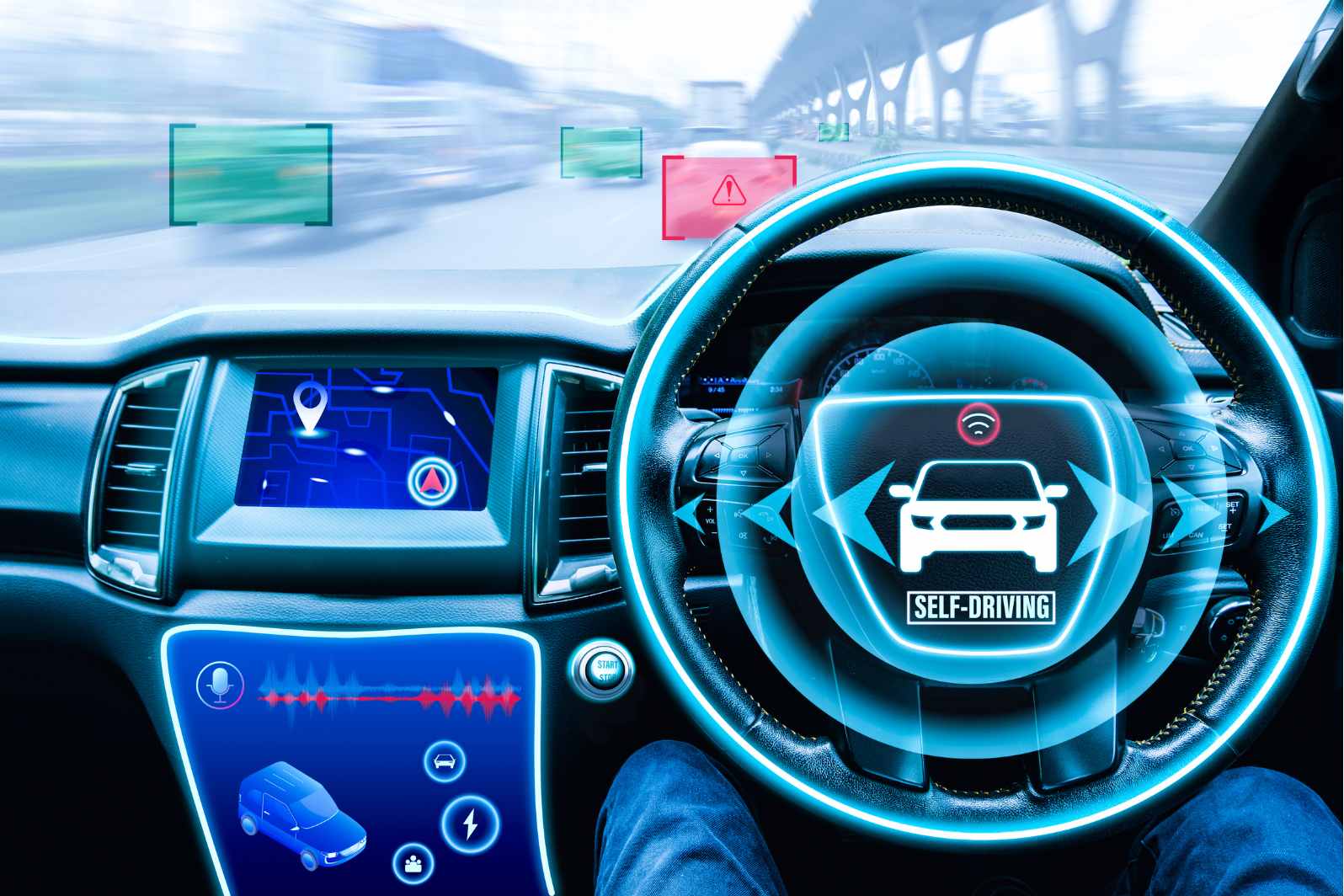
The automotive sector is speeding toward a smarter, safer future and AI technology is accelerating this transformation. Comprising everything from spotting dangerous situations to applying brakes without a human, AI is the force turning Driver Assistance Systems (DAS) into effective accessories that help to create the kind of motoring experience we all want: safer, easier and cheaper.
What generally required human intuition — spotting obstacles, estimating speed or predicting danger — can now be turned over to algorithms that learn, adapt and react faster than humans. Such AI-powered systems are contributing to a future of fully autonomous vehicles, while saving lives on today’s roads.
Let’s look at how AI is bringing about the transformation of driver assist systems and the future of driving.
1. Smarter Object Detection and Recognition
AI relies on sophisticated computer vision to detect pedestrians, vehicles, road signs and even animals as it navigates in real time That’s why innovating owners drive these companies. That helps prevent accidents by providing instant alerts to drivers or taking corrective action on its own.
Example: Tesla’s Autopilot and Volvo’s Pilot Assist rely on neural networks for identifying nearby cars and obstacles at very high accuracy.
Takeaway: AI-based vision systems improve situational awareness and reaction time.
2. Predictive Collision Avoidance
Sensors as we know them merely respond to direct threats. The AI-driven systems, by contrast, rely on speed along with trajectory and driver behavior to preempt potential collisions before they occur.
Example: Mercedes-Benz’s PRE-SAFE technology employs AI to predict crashes, tightening up seatbelts and repositioning seats pre-impact.
The lesson: Predictive safety systems can react before humans are even aware of danger.
3. Lane-Keeping and Adaptive Steering
AI allows driver-assistance systems to keep vehicles in the middle of their lanes and adjust steering on the fly. It’s always learning from road conditions, traffic flow and its environment.
Example: Through AI, BMW’s Driving Assistant Professional can help drivers keep a new car on smoother path through a curve.
The bottom line: With AI as your guide, from door to destination, it’s accuracy and confidence on every ride.
4. Adaptive Cruise Control and Traffic Jam Assistance
Artificial intelligence improves cruise control with active adjustments to real-time conditions — automatically speeding up, slowing down, or accelerating according to traffic volume.
Example: Audi’s Adaptive Cruise Assist uses radar, cameras and AI to maintain safe distances in stop-and-go traffic.
The point: AI-powered automation decreases driver fatigue and improves comfort for long drives.
5. Driver Monitoring and Fatigue Detection
AI can monitor the movement of eyes and faces, as well steering patterns, to detect fatigue or distraction in drivers and encourage them to take breaks or refocus.
Example: Subaru’s DriverFocus and Tesla’s cabin camera systems track driver attentiveness to guard against crashes induced by fatigue.
The lesson: AI is going to save us (and a lot of animals) by having cars (even driverless ones!) and drivers remain attentive.
6. Real-Time Road Condition Analysis
AI can process new information from camera feeds, GPS and other external sensors to identify road hazards such as potholes, slippery surfaces or construction areas – and recommend alternate routes.
Example: BMW’s AI technology pools road information from its connected fleet and shares it to alert nearby drivers of potential hazards on the road.
The takeaway: Smart cars that talk to each other will make the roads safer for everyone.
7. Enhanced Parking Assistance
Parking systems like these, powered by AI, use sensors and vision algorithms to locate tight parking spaces without human intervention, judge their size, and guide your car into them — of course with varying degrees of driver effort.
Example: Tesla’s Summon feature and BMW’s Remote Parking Assistant allow cars to park themselves without a human behind the wheel.
The takeaway: One space at a time, AI removes parking as something one has to think about.
8. Automatic Emergency Braking (AEB)
With AI, response time is significantly shorter because it can perceive sudden changes in the environment and apply the brakes immediately to avoid or minimize an accident.
For example:Toyota’s Safety Sense and Ford Co-Pilot360 are powered by AEB systems which employ AI that has already saved thousands of lives around the world.
The takeaway: AI reacts in milliseconds quicker than any human.
9. Traffic Sign Recognition
With image recognition, AI can identify and interpret road signs from speed limits to stop signs and warnings – even under bad weather or poor lighting conditions.
Example: Mercedes and Audi cars use cameras with AI to read road signs and display the information on the dashboard.
The bottom line: Clever sign recognition means drivers can be kept reliably informed and onside without any effort.
10. AI for Predictive Maintenance
Driver assistance isn’t all about on-the-road safety – it’s also meant to make sure your car stays hearty and hale. AI forecasts wear on parts, warns drivers of potential problems and book services before things break down.
Example: BMW and Tesla harness AI to track battery life, brake wear and tire pressure in real time.
The lesson: Proactive intelligence is less costly, time-consuming and otherwise onerous.
11. Natural Language Voice Assistance
Today’s cars are also increasingly being outfitted with voice assistants that are powered by AI and which help drivers with navigation, entertainment and even climate systems while remaining distraction free.
Example: Mercedes-Benz’s MBUX voice system will naturally respond to requests such as, “I’m cold” or “Find the nearest charging station.”
The takeaway: Voice AI also marries convenience with safety by allowing drivers to keep their hands on the wheel.
12. Vehicle-to-Everything (V2X) Communication
AI allows cars to speak with one another, the infrastructure and people – swapping information that ultimately prevents accidents and optimizes traffic.
Example: Honda and Toyota are testing AI-enabled V2X systems that alert drivers about dangerous conditions detected by networked traffic lights and sensors.
The upshot: AI means each car is a part of a smarter, safer transportation system.
13. Personalized Driving Experiences
The AI learns a driver’s preferences — seating position, driving style, temperature settings, you name it — and automatically takes care of those for them.
Example: BMW’s AI Assistant learns from the driver, providing tailored suggestions about routes, settings and infotainment.
The takeaway: There is a new level of personalization so that each ride can be dialed in toward the driver’s comfort and preferences.
14. Data Sharing for Continuous Learning
AI-powered cars are gathering data from millions of vehicles on the road. Such collective experience can be used to refine and adapt systems over time in order to achieve greater accuracy or better accommodate new circumstances.
Example: Tesla’s fleet learning system collects real-world data from users around the world to improve its Autopilot algorithms.
The result: Smarter driving with every mile traveled, thanks to collective AI learning.
15. Pathway to Full Autonomy
ADAS is the base for autonomy cars. AI is filling in the gaps by honing navigation, decision-making and perception of the environment.
Example: Companies such as Waymo and Cruise rely on AI-powered Level 4 autonomy systems that can function without a human behind the wheel in some conditions.
The bottom line: Today’s AI-enhanced driving is the bridge to tomorrow’s self-driving cars.
Conclusion
But A.I. isn’t just making driver assistance better it’s redefining what it is. Through creating more aware, responsive and intelligent vehicles, AI is improving road safety and accelerating hybrid and fully connected driving.
Real-time hazard detection and predictive maintenance: ensuring AI makes every journey safer, smoother and more connected.
The future of this roadway belongs to intelligent vehicles driven by an even-smarter intelligence, where technology and safety are in lockstep.
FAQs:
Q1. What role does AI play in driver assistance systems?
AI is also used to analyse sensor data and identify hazards, and to make split-second driving decisions that both increase safety and enhance comfort.
Q2. AI drivers, help or hindrance?
Yes. Well-tuned, they are even safer than human drivers in high-stakes situations because they can respond more quickly and accurately.
Q3. Can AI-drive a car by its own?
Some systems, such as Tesla’s Autopilot or Waymo’s self-driving cars, already provide semi-autonomous driving with full autonomy in development.
Q4. How does AI identify driver fatigue?
It relies on cameras and sensors to monitor facial expressions, head position and steering activity, letting drivers know when they appear to be getting tired.
Q5. What does the future look like for AI and automotive tech?
AI will drive the transition from driver assisted to fully autonomous, with not only improved safety but personalization and integration.
