


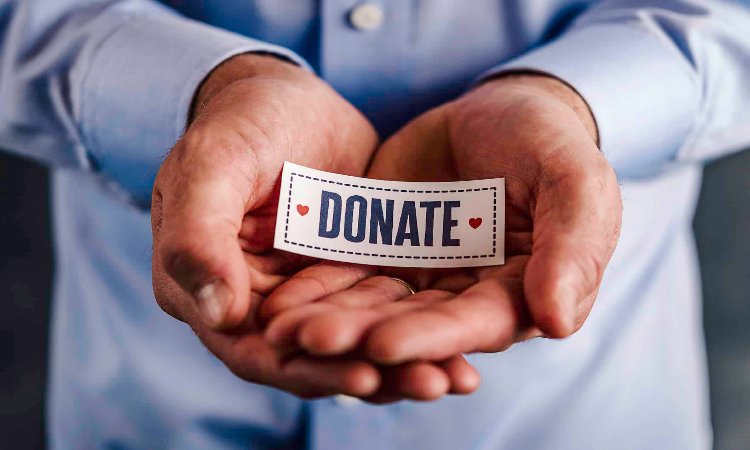
When people donate, they often wonder where the money actually goes, who it reaches, and whether it really makes a difference. Many donors feel confused because they don’t get to see the real ground situation and sometimes assume their small donation won’t matter much. But actually, the journey of a donation, even a tiny one, is much bigger than most people imagine, especially when it goes toward children’s education in India. The process is not a straight line, but every stage adds something important, and when everything works together, a child who once couldn’t even go to school ends up sitting in a classroom with books, meals, a uniform, and maybe even a smile that wasn’t there before.
When the Donation First Arrives
The moment you click Pay or send a transfer, the donation is added to the NGO’s system. It usually goes into a general pool for education work unless you specify some special purpose. Many people think donations get used instantly on the same day, but that’s rarely how it works. The NGO team first reviews budgets, ongoing programs, and areas where funds are most urgently needed. Sometimes the money is kept for a couple of days for verification; sometimes longer if banking delays occur or if the NGO has compliance checks. All these boring steps might look useless, but they actually stop fraud and ensure your money goes to actual kids who need it.
Mapping the Needs on the Ground
After funds are confirmed, the team reviews field reports from various communities. One village school may need more teachers, another area may have kids dropping out because of the long distance, another school may not have basic toilets, so girls don’t come at all. These reports come from social workers, volunteers, teachers, parent groups, and sometimes even children themselves. The NGO then matches donations with these needs. Because money isn’t unlimited, they try to prioritise what helps children the fastest—like school supplies, teacher training, transport support, mid-day meal support, or community meetings that convince parents to send kids back to school.
Planning the Programs
This part is not glamorous. Teams sit down to plan budgets, make lists, obtain permissions, coordinate with schools, write proposals, talk to government officials, confirm partners, and so on. Sometimes plans change suddenly because a school floods, a teacher leaves, a community meeting doesn’t go well, or parents refuse to attend. So plans keep adjusting. But your donation is always included somewhere in these plans, even if the route is not a straight line.
Moving Resources to the Community
After planning, the next stage is sending money, books, training materials, or support staff into the ground area. Social workers and field coordinators ensure funds are appropriately used. They buy notebooks, pay local tutors, arrange transport, or set up meeting spaces. If a school needs a new set of benches or blackboards, your donation might help cover part of that. Many donors don’t realise how much logistics go into this—sometimes roads are bad, sometimes supplies don’t arrive on time, sometimes parents need convincing again. But slowly things start moving.
Reaching the Child
This is where impact really shows up. A child who earlier might have been working in the fields or doing chores at home is encouraged to return to school. Another child gets a new school bag and books for the first time. A teacher receives training to handle multi-grade classrooms. Girls who earlier stayed home due to safety or sanitation concerns now have proper facilities. The donation becomes something real here—a pencil, a notebook, a bicycle, a class, a meal, a counselling session, a parent-teacher meeting, a school reopening celebration.
Sometimes the impact is small, like one child attending regularly for one month. Sometimes it is big, like a whole community deciding no child should drop out. But both are valuable steps. Progress with children is slow but steady and needs patience from everyone involved, including donors.
Monitoring and Follow-Up
NGOs don’t finish after giving supplies or doing a workshop. They track attendance, talk to parents, check whether children are learning, meet with teachers, address problems that arise, and send reports back to the primary office. If something isn’t working—maybe a child is still missing school—the team tries another way. Follow-up is where long-term change happens, because education is not a one-time thing; it needs year after year of support.
Reporting Back to Donors
Once programs run for a few months, donors receive updates—maybe an email, perhaps an annual report, possibly a story about a child whose life changed. Many people think these reports are promotional, but they are actually proof of what happened with your donation. They also help NGOs remain transparent and build trust.
Final Note
The journey of a donation is messy, long, sometimes slow, and full of behind-the-scenes work that donors rarely see. But every step matters. When you give to an organisation like CRY India, your contribution becomes part of a greater effort that helps transform a child’s future from uncertainty to opportunity, from dropping out to going to school, from silence to confidence. And that journey, even with all its complications, is worth every rupee that starts it.
