


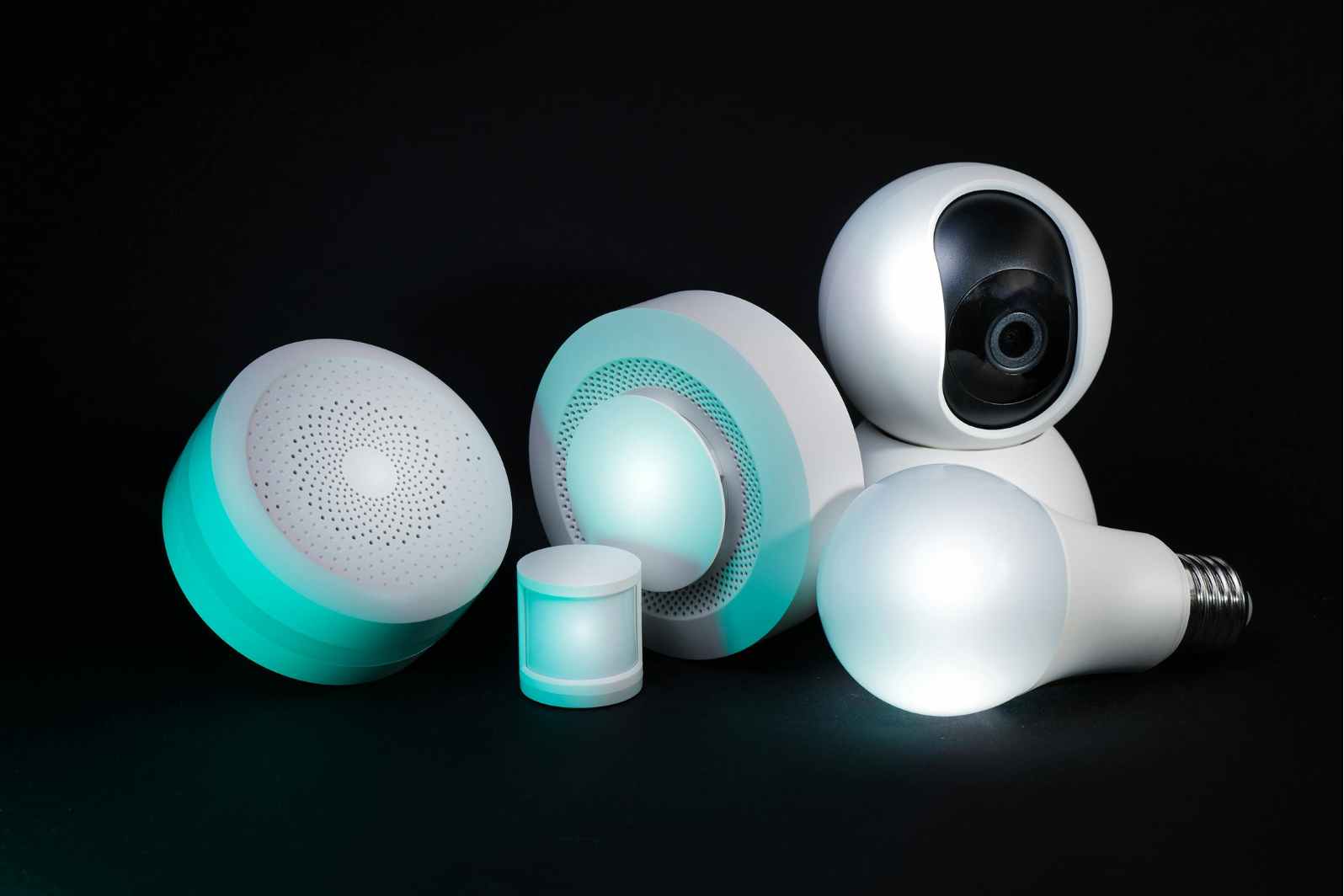
Technology has revolutionised our lives, and now homes are more energy-efficient, convenient and effortless than ever before thanks to smart devices. From voice-activated assistants to wireless indoor and outdoor lighting, smart home products bring your household into the 21st century.
In 2025, a house is not merely a place to live – it’s an intelligent habitat that learns and adapts autonomously to your every need. Keep reading for what this year’s top smart gadgets are making homes more efficient.
1. Smart Thermostats
If anything, smart thermostats are one of the more practical and effective home automations. They’ll learn your habits, so can automatically change your home’s temperature – saving energy and money.
Example: Google Nest Thermostat and the Ecobee Smart Thermostat learn your schedule, keeping your home at an ideal temperature with less wasted heating or cooling.
Benefits:
- Savings up to 25 percent on your heating and cooling energy costs
- Enables remote control of the temperature from a smartphone
- Enhances comfort and energy efficiency
Tip: Save energy while you’re out but keep your home cool during work hours by setting eco-mode.
2. Smart Lighting Systems
Putting the lights to work Smart lighting is not only about convenience, it can also maximize energy efficiency. You can turn lights on or off, dim brightness and even change colors with voice or app control.
Popular choices: Philips Hue, LIFX and Nanoleaf.
Why it’s efficient:
- When the last person leaves the room, motion sensors kill the lights.
- LED smart bulbs use less energy and last longer.
- You can program lighting for added security or home ambience.
Smart lights : Light up your life, don’t waste electricity (or emit C02) Smart lighting lets you customize your ambience to set the perfect mood.
3. Smart Plugs and Power Strips
Smart plugs allow you to add Wi-Fi connectivity to regular household appliances. You can remotely power down devices or schedule timers to conserve power.
Example: Plug in your coffee maker, or fan; set it so these turn off after a certain amount of time automatically really saves on using power for no reason.
Benefits:
- Assists in tracking and minimising standby power usage
- Compatible with voice assistants
- Affordable and easy to install
Even a relatively simple tweak, like investing in smart plugs, can ultimately result in significant energy savings.
4. Smart Security Cameras and Doorbells
Every home needs to be secure, and a new generation of AI-powered smart cameras and doorbells make that proposition easier than ever.
Top picks: Ring Video Doorbell, Arlo Pro and Google Nest Cam.
Features:
- Real-time alerts on your phone
- Motion detection and facial recognition
- Cloud storage for video footage
Why it’s important: It increases your security all while providing peace of mind when you are gone.
More advanced models can even differentiate between humans, animals, and vehicles to minimize false alerts.
5. Smart Speakers and Voice Assistants
Amazon Echo, Google Nest Audio and Apple HomePod Mini are now the controlling life support of smart homes everywhere.
You can do things like play music, operate other smart devices and hear the news or remember tasks all by using simple voice instructions.
Benefits:
- Hands-free control of multiple gadgets
- Ward against Signs of Aging Other smart home system integration
- Time-saving automation for daily tasks
Smart speakers can make homes significantly more interactive and accessible – especially for kids and the elderly.
6. Smart Refrigerators
Today’s refrigerators are designed for more than just storing cold food. Smart fridges like Samsung Family Hub are equipped with touchscreens, cameras and inventory tracking capabilities.
Features include:
- Checking food freshness
- Sending grocery alerts
- Recommending recipes for available ingredients
Why it’s efficient: Cuts down on food waste, electricity usage and the need for meal planning.
Smart refrigerators are an ideal case of AI living with us rather than in the background.
7. Smart Washing Machines
Smart washing machines are here to make the laundry process a little easier. They automatically differentiate types of fabric, load sizes and water levels to provide efficient cleaning.
Example: LG ThinQ and Samsung SmartThings washing machines are IoT-enabled devices that can be operated remotely using smartphone apps.
Benefits:
- Reduces water and detergent usage
- Offers energy-saving cycles
- Notifies you when the laundry is done
- These tools help three-fold more time and as a result makes your everyday task quickly done.
8. Smart Vacuum Cleaners and Robots
Robot operating vacuums are now an essential gadget in every busy household. They clean floors without supervision, using AI and mapping sensors.
Biggest competitors: iRobot Roomba, Eufy RoboVac and Roborock S8.
Features:
- Automatic navigation and obstacle detection
- Scheduled cleaning
- Self-charging capability
Why it’s effective: It cleans up after you while you do something else, and it uses very little energy.
Some newer models even are moppers of floors and empty their dustbins on their own.
9. Smart Water Leak Detectors
Leakage, unobserved, may be very injurious. Smart leak detectors deliver immediate notifications to your phone when they sense dampness in spots like underneath sinks or near washing machines.
Example: Honeywell Lyric and Flo by Moen are some common picks.
Benefits:
- Prevents costly water damage
- Monitors humidity and temperature
- Simple to set – up and compatible with popular smart home systems
- One simple sensor can defend your home and save thousands a year in repairs.
10. Smart Energy Monitors
To really make your home efficient, you must first find out how much energy it uses. Smart energy monitors, which plug into your electrical panel and monitor power use in real time.
Example: Sense Energy Monitor AND Emporia Vue.
Why it’s useful:
- Identifies energy-hungry appliances
- Provides daily and monthly reports
- Encourages better energy habits
Armed with such information, you can dial back gratuitous consumption and save on your utility bills.
Conclusion
Smart gadgets are helping homes run better. Things like energy-saving thermostats and voice assistants make daily life easier and more comfortable.
To build a smart home, pick devices that match your needs and work well together. With the right setup, you can save energy, time, and money and enjoy a safer, smarter way of living.
FAQs:
Q1. What’s the most practical smart home gadget?
The Super popular smart thermostats, and lighting systems are some of the best energy savers and convenient enhancements you could make.
Q2. Are smart home devices a waste of money?
Indeed, energy-efficient appliances save on electricity and water bills across the period.
Q3. Are smart home devices secure?
Most are secure, but use strong passwords and update the firmware regularly to prevent hacking.
Q4. One app to rule all the smart gadgets?
Yes, but devices such as Google Home, Amazon’s Alexa and Apple’s HomeKit allow you to control them all from one place.
Q5. Are smart homes hard to have installed?
Not at all. For most devices, plug-and-play is paired with easy mobile app integration.
